Waste Records and Reporting from Construction Sites: A Practical Guide for Cables
Waste Records and Reporting from Construction Sites: A Practical Guide for Cables
Cables from a construction site must be recorded continuously and reported once a year together with other waste. For 2026, both obligations are still fulfilled under Decree of the Ministry of Environment of the Slovak Republic No. 366/2015 Coll. The new Decree No. 89/2024 Coll. only takes effect on 1 January 2027. This article walks through record-keeping and reporting step by step, illustrates them with an example and points out the mistakes that keep recurring with cables.
Which rules apply in 2026 and 2027
The obligation to keep waste records and report data from them follows from Section 14(1)(f) and (g) of Act No. 79/2015 Coll. on Waste. The details are set out in an implementing decree.
Decree No. 89/2024 Coll. on record-keeping and reporting obligations was originally due to apply from 1 January 2026. Decree No. 369/2025 Coll. postponed its effective date to 1 January 2027. It also added a transitional provision under which the reporting obligation for 2026 is fulfilled according to the rules in force until 31 December 2026.
For construction companies, this results in the following split:
| Period | Records | Annual report | Regulation |
|---|---|---|---|
| year 2026 | waste record sheet, kept continuously | by 28 February 2027 | Decree No. 366/2015 Coll. |
| from 1 January 2027 | electronic, at least once a month, for each place where waste arises | under the new rules, not yet final | Decree No. 89/2024 Coll. as amended by Decree No. 369/2025 Coll. |
The older interpretation that the new decree already applies from 2026 is therefore outdated. If your internal procedures still contain it, they are worth correcting.
Who keeps the records and who reports
For construction waste, the waste producer is defined in Section 77(2) of the Waste Act. For work carried out for a legal entity or a business, the producer is the person who was issued the permit under building regulations, usually the developer (building owner). How to determine the producer and how to split tasks in the construction contract is explained in detail in the article Cables from construction sites and the Waste Act.
In practice, records and the report may be prepared by the general contractor or an external waste manager. Responsibility for meeting the obligations, however, remains with the obliged person. The contract should therefore state explicitly who collects the data, who files the report and who checks it.
Do you know who files the waste report for your construction site? When agreeing on cable collection, we clarify in advance to whom and in what form we send the handover documents.
Record-keeping during 2026
Under Section 2 of Decree No. 366/2015 Coll., records are kept by waste type on the waste record sheet in Annex 1. They are kept with no quantity limit, so even small batches count. The record sheet is filled in continuously for the calendar year and kept for five years in paper or electronic form.
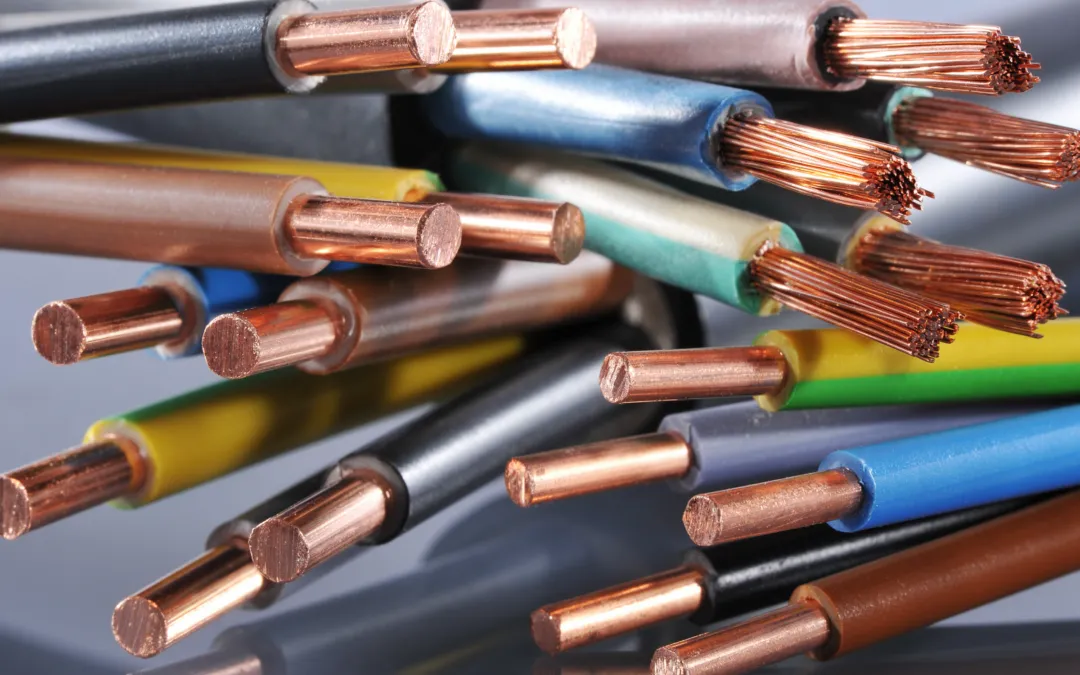
For cables, this means a separate record sheet for each waste code. Ordinary cables have code 17 04 11, cables containing hazardous substances have code 17 04 10 and stripped copper has code 17 04 01. How to classify cables is explained in the article Waste Catalogue Code 17 04 11 for Cables. For hazardous waste, the decree also requires a Y-code.
Each entry is based on a document from the recipient. For cables, this is usually a weighbridge ticket or receipt with the date, waste code and weight. Record the data from the document, not from an on-site estimate.
Annual report for 2026
Under Section 3 of Decree No. 366/2015 Coll., the Report on the Generation of Waste and its Management is filed by a waste holder who handles, in total, more than 50 kg of hazardous waste or more than 1 t of other (non-hazardous) waste per year. Waste listed in Annex 3 of the decree is reported regardless of quantity.
The report is filed using the form in Annex 2 for the calendar year, no later than 28 February of the following year. For 2026, the deadline is therefore 28 February 2027. It is addressed to the competent district office.
Since 1 January 2025, reports have been filed exclusively electronically through the Waste Management Information System (ISOH). The form can be completed manually on the portal or uploaded as an XML file. District offices warn that a paper report is considered not filed.
The 1 t threshold applies to the total of all other waste, not to a single type. On a construction site you will almost always exceed it, so cables must be reported even if there were only a few hundred kilograms. Which district office is competent, and whether to file a separate report for each site, should be confirmed with the district office or your waste manager.
Do you have all the weighbridge tickets for cables needed for your 2026 report? If a document for any handover with us is missing, we will help trace it by date and site.
What changes from 2027
From 1 January 2027, records are kept under Decree No. 89/2024 Coll. Records will be electronic, continuous and updated at least once a month. They are kept separately for each place where waste arises and for each activity. If the site address differs from the company's registered office, an identifier assigned by the information system when the place is registered is used. Records are kept for five years.
Data is sent to the information system mainly by the person who first accepts the waste, for example a scrap buyer. This is done at least once per quarter, no later than the end of the following month. The original waste producer may provide data but must always keep records.
The Ministry of Environment publishes a transition timetable on the ISOH portal. Registration of places where waste arises is scheduled to open on 9 November 2026. From January 2027, weighbridge tickets and consignment notes are to include the identifier of the place where waste arises. The new annual report is to be filed for the first time in 2028, for 2027.
The ministry is also preparing an amendment to Decree No. 89/2024 Coll. According to the published plan, registration and electronic records would apply to producers with more than 20 t of non-hazardous or 1 t of hazardous waste per year. The annual report would be filed by producers above 100 t of non-hazardous or 1 t of hazardous waste. These thresholds are not yet binding and may change.
Are you preparing for the new site identifier from 2027? We will agree on which site details we need when collecting cables, so that the weighbridge ticket shows them correctly.
Step-by-step procedure
- In the construction contract, specify who keeps records, who prepares the report and who files it in ISOH.
- Sign a contract with an authorised cable recipient before the waste arises.
- On site, collect cables separately from other metal and set aside suspicious old cables.
- At every handover, ask for a weighbridge ticket with the date, waste code, weight and site designation.
- Enter the data continuously into the record sheet, separately for each waste code.
- At year-end, add up the quantities of all waste types and compare them with the 1 t and 50 kg thresholds.
- Complete the report according to Annex 2 and file it electronically through ISOH by 28 February.
- Check that your data matches the recipient's documents and archive the report and documents for five years.
- From 9 November 2026, follow the registration of places where waste arises in ISOH and prepare the site for record-keeping from 2027.
Illustrative example
The figures in this example are illustrative and do not reflect a specific project.
A developer is building an apartment block and in 2026 hands over the following waste from the site: concrete 640 t, iron and steel 18.4 t, mixed construction waste 95 t and CYKY cable offcuts 0.84 t. While dismantling an old service connection, it also finds 60 kg of paper-insulated cable. After assessment, it classifies it as hazardous under code 17 04 10.
Other (non-hazardous) waste:
640 + 18.4 + 95 + 0.84 = 754.24 t  > 1 t   → report required

Hazardous waste:
60 kg = 0.06 t                     > 50 kg → report required for it too

Cables in the report:
17 04 11   0.84 t   non-hazardous waste
17 04 10   0.06 t   hazardous waste (with Y-code)
The 17 04 11 cables alone would not exceed the 1 t threshold. The report, however, is assessed on the total of other waste, so the developer includes them. The 60 kg of old cable exceeds the hazardous waste threshold on its own. The developer files the 2026 report electronically by 28 February 2027.
Documents to have ready
For records and reporting, it is advisable to have the following documents ready:
- the construction contract dividing duties between the developer and the contractor,
- the contract with an authorised recipient and a copy of its authorisation,
- weighbridge tickets or receipts with date, waste code and weight,
- waste record sheets for each code,
- for hazardous waste, the classification assessment and consignment notes,
- confirmation of filing the report in ISOH.
The same documents are needed for final building approval. Data on recycled cables can also be used in an ESG report (environmental, social and governance), as described in the article Cable Recycling in ESG Reporting.
Common mistakes
The first mistake is following Decree No. 89/2024 Coll. already in 2026. Its effective date was postponed to 2027, and 2026 is reported under Decree No. 366/2015 Coll.
The second mistake is assessing the threshold for each waste type separately. The 1 t threshold applies to the total of other waste, so even a small quantity of cables belongs in the report.
The third mistake is a paper report. Since 2025, reports are filed exclusively electronically through ISOH.
The fourth mistake is cables mixed with other metal. A mixed batch is recorded under a different code, and cables cannot be reported separately.
The fifth mistake is data without supporting documents. Weights estimated on site often do not match the recipient's weighbridge ticket, and the difference is hard to explain during an inspection.
Do cable weights in your records not match the recipient's documents? We weigh cables at every collection and issue a document with the waste code, so each record entry has a solid basis.
Align records with documents →
Frequently asked questions
Do we have to report cables if there was less than 1 t?
Usually yes. The 1 t threshold is assessed on the total of all other waste for the year. On a construction site, concrete or mixed waste alone usually exceeds it.
What is the deadline for the 2026 report?
28 February 2027, electronically through ISOH, under Decree No. 366/2015 Coll.
Does Decree No. 89/2024 Coll. apply from 2026?
No. Decree No. 369/2025 Coll. postponed its effective date to 1 January 2027. For 2026, reporting follows the rules in force until 31 December 2026.
Does the scrap buyer send data to ISOH, or do we?
For 2026, the report is filed by the waste holder who exceeds the thresholds. From 2027, quarterly data is sent mainly by the person who first accepts the waste. The producer, however, always keeps records. What the producers' annual report will look like from 2028 depends on the planned amendment.
How long must records and reports be kept?
Five years, under both Decree No. 366/2015 Coll. and Decree No. 89/2024 Coll.
Conclusion
For 2026, cables from construction sites are recorded on the waste record sheet and reported under Decree No. 366/2015 Coll. The report must be filed electronically through ISOH by 28 February 2027 if the total of other waste exceeds 1 t or hazardous waste exceeds 50 kg. From 2027, electronic records for each place where waste arises and a site identifier on documents are coming. Cables sorted separately and backed by weighbridge tickets are easy to record under both the old and the new rules.
Do you want your cable documents ready for the report and for the 2027 transition? Tell us which projects are involved and how many cables you expect. We will get back to you with collection options.
Sources
- Act No. 79/2015 Coll. on Waste
- Decree No. 366/2015 Coll. on record-keeping and reporting obligations
- Decree No. 89/2024 Coll. on record-keeping and reporting obligations, version from 1 January 2027
- Decree No. 369/2025 Coll. amending Decree No. 89/2024 Coll.
- Decree No. 365/2015 Coll. establishing the Waste Catalogue
- ISOH: Electronic waste records 2027
- District Office Myjava: Notice on the change in filing waste reports