Cables from construction sites and the Waste Act: what a construction company must do
Cables from construction sites and the Waste Act: what a construction company must do
Cables from a construction site are construction waste like any other. The waste producer must classify them correctly, sort them, hand them over to an authorised person, keep records and report them. On larger projects, two further duties apply: a contract concluded before the waste arises and a recovery target for construction waste. This article summarises the obligations under Slovak Act No. 79/2015 Coll. on Waste, as in force from 1 January 2026, and links to detailed articles on each step.
Why cables count as construction waste
The Waste Act treats as construction and demolition waste all waste generated by construction work, safety work, maintenance and alteration of buildings and their removal. The Act calls these activities together construction and demolition work (Section 77(1)).
Offcuts of new cables from electrical installations and dismantled old wiring therefore belong to group 17 of the Waste Catalogue. Ordinary cables have code 17 04 11, cables containing hazardous substances code 17 04 10. How to classify cables and when to use another code is explained in the article [waste catalogue code for cables](DOPLNIŤ URL).
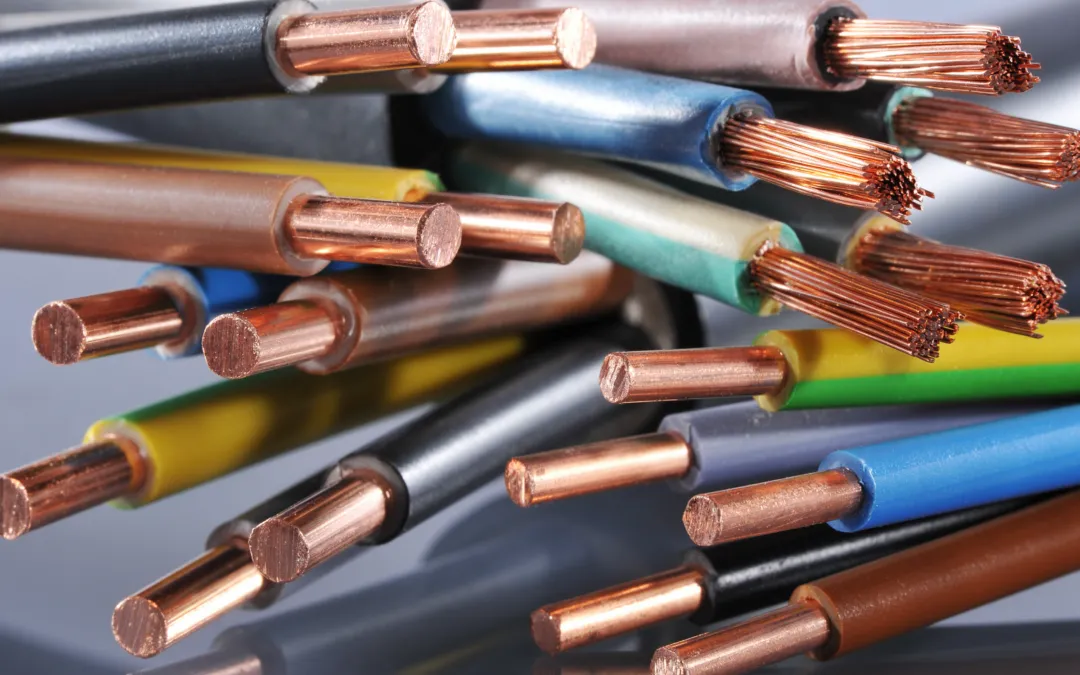
Cables contain copper or aluminium, which can be recycled. On a construction site, however, they make up a small share of the waste by weight. They are easily overlooked in a waste inventory, even though the same obligations apply to them as to concrete or bricks.
Who is the waste producer on a construction site
For construction waste, the producer is defined specifically in Section 77(2) of the Waste Act. This wording was introduced by Act No. 230/2022 Coll., effective from 30 June 2022.
Where the work is carried out for a legal entity or a sole trader, the producer is the person to whom a permit under the building regulations was issued. As a rule, this is the developer or investor (in Slovak law, the "stavebník"). Where similar work is carried out for private individuals, the producer is whoever performs the work.
For large projects, this has an important consequence. Responsibility for waste management lies with the developer, even if the waste is physically handled by the general contractor or an electrical subcontractor. The division of tasks should therefore be set out in the works contract. The contract should state who arranges the handover of waste, who keeps the records and who archives the documents.
Do your contracts make clear who deals with cables from the site? When agreeing on collection, we can adapt the documents to match the division of tasks between the developer and the contractor.
Discuss cable collection from your site →
Basic obligations under Section 14(1)
The producer of construction waste first has all the obligations of a waste holder under Section 14(1). For cables, the most relevant are:
- Classify waste correctly according to the Waste Catalogue or ensure its correct classification (letter a).
- Collect waste sorted by type and protect it from deterioration, theft or other unwanted release (letter b).
- Collect hazardous waste separately by type and label it (letter c).
- Ensure waste is treated according to the waste hierarchy, i.e. recycling takes precedence over disposal (letter d).
- Hand over waste only to a person authorised to handle waste under the Act (letter e).
- Keep records of the types and quantities of waste and how it was handled, and report data from them (letters f and g).
- Collect waste for no more than three years before recovery and no more than one year before disposal (letter i).
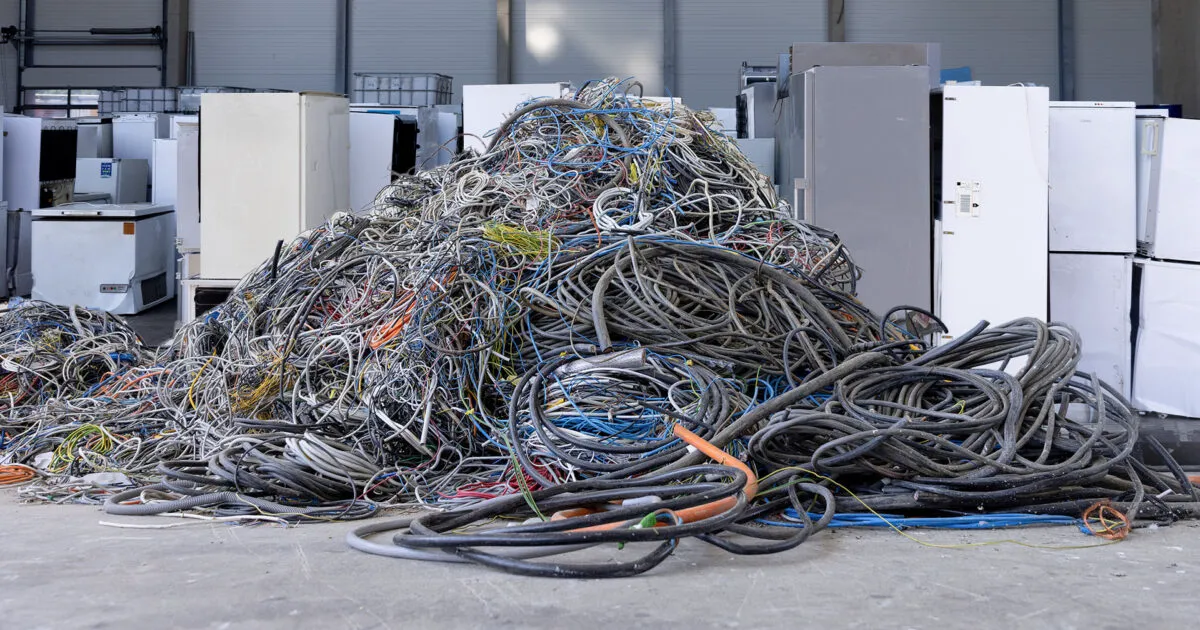
Protection against theft matters in practice for cables. Copper is valuable, and cables left in the open on a site tend to disappear. A lockable container or a designated area helps meet the obligation and protects the value of the material. Container options are described in the article [cable container](DOPLNIŤ URL).
Burning cables to remove insulation is not a method of waste handling permitted by the Act. More in the article [cable burning fine](DOPLNIŤ URL).
Specific obligations of the construction waste producer under Section 77(3)
In addition to Section 14(1), Section 77(3) imposes further obligations on the producer of construction waste. The producer must:
- For buildings with a built-up area over 300 m², ensure recovery and recycling of construction and demolition waste at least at the level of the binding targets in Annex 3, Part VI, point 2 of the Act (letter a).
- Carry out selective demolition in line with the implementing regulation, so that materials and waste can be reused and recycled as much as possible (letter b).
- Give priority to material recovery of construction waste and to using recycled output on site, where technical, economic and organisational conditions allow (letter c).
- Before the waste arises, have a demonstrable contractual relationship for its physical handling, at least to the extent set by the implementing regulation (letter d).
- For demolition, notify the district office in writing at least three working days in advance of the method of selective demolition (letter e).
- Within 90 days of completing demolition, notify the same office of the evaluation of the selective demolition (letter f).
The implementing regulation is Decree of the Ministry of the Environment No. 344/2022 Coll. on construction and demolition waste. It sets out the selective demolition procedure, the minimum content of the contract and the content of the notifications.
According to available interpretations, the recovery target is at least 70 % by weight of construction and demolition waste. It is based on Directive 2008/98/EC on waste. We recommend checking with your waste manager or the competent district office how exactly the target is calculated for your projects.
For cables, this has two practical implications. The contract with the cable collector must be in place before cables arise on site, not at the first collection. At the same time, cables handed over for recycling count towards recovered construction waste, so the documents for them should be collected from the start of construction.
Is your cable collection contract signed before work begins? We can prepare a contract for the collection of cables and metals in advance, before the first pick-up from the site.
Arrange a collection contract →
Records and reporting
From 1 January 2026, records are kept under Decree No. 89/2024 Coll. on record-keeping and reporting obligations. Records are kept electronically, on an ongoing basis and at least once a month, separately for each place where waste arises. For a construction project, this is usually the site. Records must be kept for at least five years.
Data are submitted to the Waste Management Information System (ISOH, from the Slovak Informačný systém odpadového hospodárstva) mainly by the person who first takes over the waste, for example a scrap buyer. The producer, however, must keep its own records. The detailed procedure is in the articles [waste catalogue code for cables](DOPLNIŤ URL) and [waste reporting for construction sites](DOPLNIŤ URL).
Handing cables over to an authorised person
Cables may be handed over only to a person authorised to handle waste under the Act. Before signing a contract, it is advisable to check the collector's authorisation and keep a copy.
A buyer of metal waste must pay by postal payment order or by bank transfer. This follows from Section 16(8)(d) of the Waste Act. When metal waste is sold between VAT payers, the domestic reverse charge may also apply. It is explained in the article [reverse charge for waste](DOPLNIŤ URL).
Step-by-step procedure
- Before work begins, set out in the works contract who arranges the handover of waste, the records and the archiving of documents on behalf of the developer.
- Before the waste arises, sign a contract with an authorised collector of cables and metals.
- For demolition, notify the district office of the selective demolition method at least three working days in advance.
- On site, collect cables separately from other metal waste and protect them from theft. Set aside suspicious old cables separately.
- Classify each batch under the correct code, most often 17 04 11.
- At handover, ask for a weighbridge ticket or other document with the code, weight and date.
- At least once a month, enter the data in the electronic records for the site.
- Within 90 days after demolition, report the evaluation of the selective demolition and archive the documents for the occupancy approval and audits.
Illustrative example
The figures in this example are illustrative and do not reflect a specific project.
A developer builds an apartment building with a built-up area over 300 m². The project generates 1,200 t of construction waste. 800 t of concrete, 150 t of bricks and 35 t of metals, including 5 t of cables, are handed over for recycling. 200 t of mixed waste and 15 t of insulation and plasterboard go to landfill.
Total:        800 + 150 + 35 + 200 + 15 = 1,200 t
Recovered:    800 + 150 + 35            =   985 t
Recovery rate:  985 / 1,200 = 0.821 = 82.1 %
Cable share:      5 / 1,200 = 0.004 =  0.4 %
By weight, cables make up less than half a percent of the waste. They will not decide whether the recovery target is met, but if they are mixed with mixed waste, the recovered quantity falls and the value of the metal is lost. Sorting on site and documents from the collector are therefore a cheap way to keep this part of the waste under control.
Documents to have ready
For cables from a construction site, it is advisable to have the following documents ready:
- the works contract dividing duties between the developer and the contractor,
- a contract with an authorised collector concluded before the waste arises,
- a copy of the collector's authorisation to handle waste,
- weighbridge tickets or handover documents with the waste code, weight and date,
- electronic records for each site,
- for demolition, the notification of the selective demolition method and its evaluation.
The same documents are useful for the occupancy approval; see the article [waste documents for occupancy approval](DOPLNIŤ URL). Data on recycled metals can also be used in an ESG report (environmental, social and governance); see [construction waste recycling ESG](DOPLNIŤ URL).
Do you need documents for handed-over cables for each site? At collection, we issue a document with the waste code and weight and state the site according to your information.
Prepare collection documents →
Common mistakes
The first mistake is assuming that waste is the contractor's business. On commercial projects, the producer is usually the developer, who under Section 77(3) is responsible for waste management. The contract with the contractor mainly divides practical tasks.
The second mistake is signing the contract with the collector only at the first pick-up. The Act requires a demonstrable contractual relationship before the waste arises.
The third mistake is mixing cables with other metal or mixed construction waste. This worsens both the records and the buy-back price. How to sort cables is described in the article [cable sorting](DOPLNIŤ URL).
The fourth mistake is handing cables to someone without authorisation, or without a weight document. That quantity is then missing from the records.
Do your cables end up in mixed waste? We can advise on setting up separate cable collection on site and how often to have it picked up.
Frequently asked questions
Who is the waste producer when a subcontractor removes the cables?
For work carried out for a legal entity or a business, the producer is the person to whom a permit under the building regulations was issued, usually the developer. The subcontractor may physically hand over the waste if this is agreed in the contract.
Does the recovery target also apply to smaller buildings?
The obligation under Section 77(3)(a) applies to buildings with a built-up area over 300 m². The producer's other obligations, such as the contract before the waste arises, apply without this threshold.
Do we have to notify demolition if we only remove the electrical installation?
The notification under Section 77(3)(e) concerns demolition work. Whether the work counts as demolition or as an alteration of the building depends on its scope. We recommend checking with the district office. Official steps for removing a building are described in the article [building removal permit](DOPLNIŤ URL).
How long can cables stay on site?
Waste intended for recovery may be collected for up to three years. For cables, however, regular removal is advisable because of the risk of theft.
Can a scrap buyer pay us for cables in cash?
No. Under Section 16(8)(d) of the Waste Act, metal waste is paid for by postal payment order or by bank transfer.
Conclusion
Cables from construction sites are subject to the same rules as other construction waste. The producer is usually the developer, who is responsible for classification, sorting, handover to an authorised person and record-keeping. For buildings over 300 m² of built-up area, a recovery target applies, and for all projects there is a duty to sign a contract with a collector before the waste arises. Cables sorted separately and backed by weighbridge tickets are one of the easiest parts of construction waste to keep under control.
Are you preparing a project and want cable collection sorted in advance? Send us the scope of the project and the expected quantity of cables. We will get back to you with collection options.
Sources
- Act No. 79/2015 Coll. on Waste (in Slovak)
- Act No. 230/2022 Coll. amending the Waste Act, new wording of Section 77 (in Slovak)
- Decree No. 344/2022 Coll. on construction and demolition waste (in Slovak)
- Decree No. 89/2024 Coll. on record-keeping and reporting obligations (in Slovak)
- Decree No. 365/2015 Coll. establishing the Waste Catalogue (in Slovak)
- Ministry of the Environment of the Slovak Republic: Construction waste handbook (in Slovak)
- Directive 2008/98/EC on waste