Millberry copper wire: what it is and how to sell it for the best price
Millberry copper wire: what it is and how to sell it for the best price
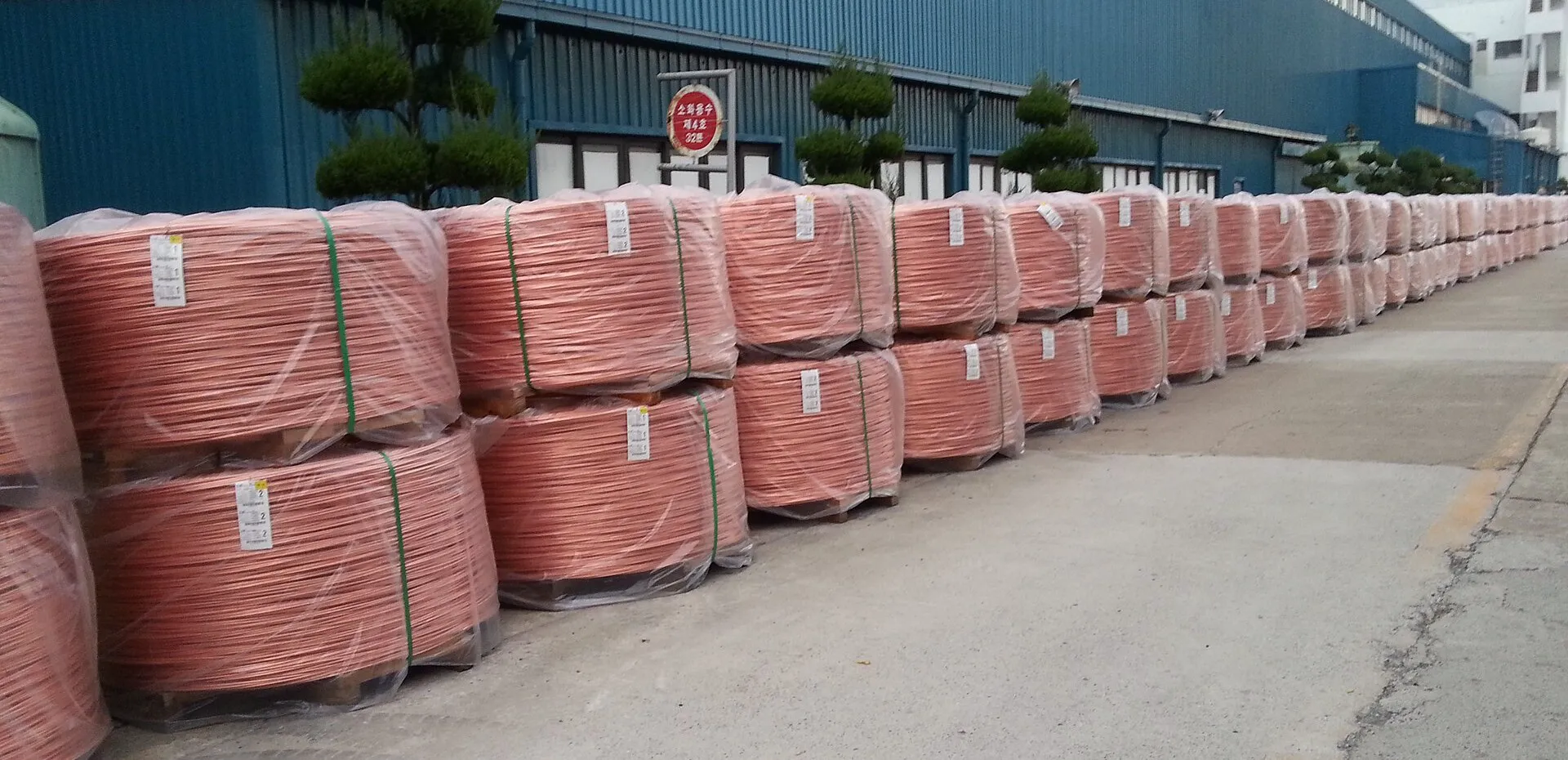
Millberry is the trade name for the cleanest grade of copper scrap: bare, new, bright copper wire with no insulation, coating or oxidation. The Millberry price is the highest of all copper grades at a scrap buyer; in the WIP price list as of 12 Nov 2026 it is €10.00 per kg. Only solid wire that is clean, unburnt and untinned qualifies, so what matters most is how you strip and store the copper.
What Millberry is and where the name comes from
The name comes from the English-speaking scrap trade. The American recyclers' association ISRI (now ReMA) uses code names such as Barley, Berry or Birch for copper scrap grades. "Millberry" is not an official code in that specification but an established trade term for bright bare copper wire, known in English as bare bright copper wire. In Slovakia it is also called lesklá meď (bright copper), nová meď (new copper) or drôt Cu.
The exact definition varies slightly between buyers. The conditions that recur in trade descriptions of bright copper wire (for example at the American recyclers OKON Recycling and HC Metals) are:
- Bare unalloyed copper, free of insulation, varnish, paint and rubber.
- No coating. Tinned, silver-plated or nickel-plated wire does not belong in this grade.
- No oxidation, not burnt. The copper must be bright, without dark stains or brittle burnt spots.
- Minimum thickness. Trade descriptions specify wire no thinner than 16 gauge, which is a diameter of about 1.29 mm.
- No foreign metals. No terminals, cable lugs, solder or steel.
In practice, the 16-gauge limit means that solid wire with a cross-section of 1.5 mm² (diameter 1.38 mm) is just above it and wire with a cross-section of 1 mm² (1.13 mm) is below it. Fine strands from flexible conductors never meet it, because the individual strands are only tenths of a millimetre thick.
Solid wire diameter d [mm] = 2 × √(cross-section [mm²] ÷ π)
1.5 mm²  → d = 1.38 mm
2.5 mm²  → d = 1.78 mm
16 gauge → d = 1.29 mm (cross-section approx. 1.31 mm²)
Check in advance which exact conditions a particular buyer applies. The WIP price list shows the item "Cu drôt nový – MILLBERRY" (new Cu wire – Millberry) without further description, so for borderline cases (thin wire, slightly oxidised copper) call the number given in the price list.
Millberry price compared with other copper
In the WIP price list, which we loaded on 12 Nov 2026, the copper items are:
| Item in price list | Description | Price per kg |
|---|---|---|
| Cu drôt nový – Millberry | New Cu wire | €10.00 |
| Cu MIX | Burnt and tinned copper, pieces | €9.60 |
| Cu káble 60 % | Copper cable with 60 % metal content | €4.00 |
| Cu káble 50 % | Copper cable with 50 % metal content | €3.50 |
| Cu káble 40 % | Copper cable with 40 % metal content | €3.00 |
| Cu káble 30 % | Copper cable with 30 % metal content | €2.00 |
| Cu káble 20 % | Copper cable with 20 % metal content | €1.00 |
| Cu káble 10 % | Copper cable with 10 % metal content | €0.50 |
Prices change with the copper price on the exchange, so check the current price list before you hand material over.
Two things follow from the table. The difference between Millberry and Cu MIX in the current price list is only €0.40 per kg, or 4 %. The much bigger jump is between bare copper and insulated copper: a kilogram of cable with 40 % copper fetches €3.00, a kilogram of bare wire €10.00. The real money is therefore made not by the shine, but by whether the copper has been taken out of the cable at all.
How the buying prices of the individual copper grades differ and how to separate them is covered in a separate article on Cu mix, tinned and burnt copper.
Not sure whether your copper will pass as Millberry? Look at the copper items in the price list and ask in advance about borderline cases.
Where an electrician's copper wire comes from
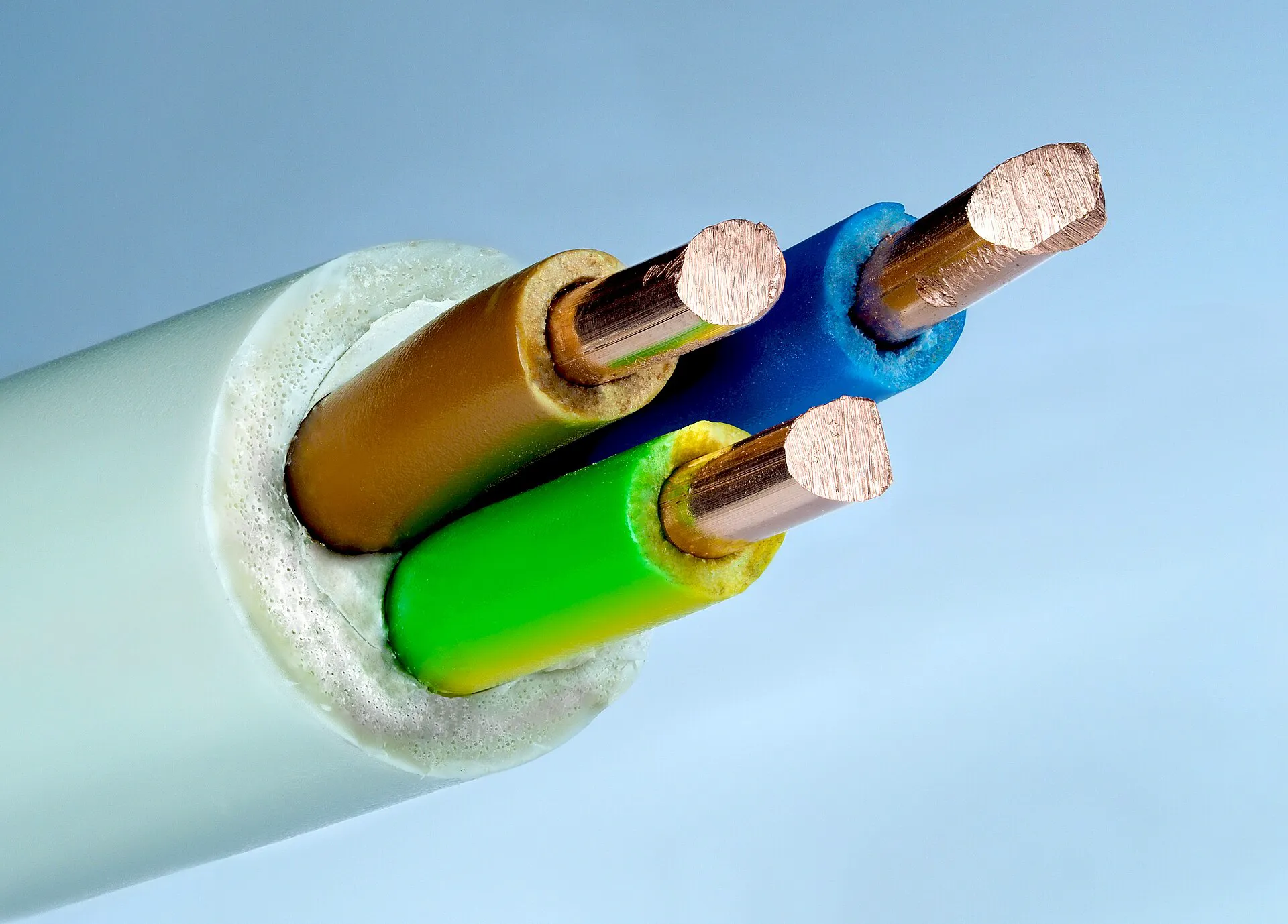
The most common source is installation cable with class 1 solid conductors:
| Source | Conductor type | Suitable for Millberry |
|---|---|---|
| CYKY 3×1.5 to 5×10 | solid wire 1.5 to 10 mm² | yes, after stripping |
| CY (H07V-U) 1.5 to 10 mm² | solid wire | yes, after stripping |
| Bare copper earthing wire | solid wire, often oxidised | only if bright |
| CYA, H07V-K, flexible cords | fine strands | no |
| Data and telephone cables | wire 0.4 to 0.6 mm, sometimes tinned | no |
| Tinned conductors and strands | copper with a tin coating | no, rather Cu MIX |
Class 2 stranded conductors in larger cross-sections (for example 16 mm² and above) have thicker strands and are accepted by some buyers. Class 5 fine strands, however, are too thin and are usually graded lower.
We calculate the copper content of the individual CYKY types in detail in the article How much copper is in a CYKY cable.
Calculation: cable or Millberry (illustrative)
For 100 m of CYKY 3×2.5 and CYKY 5×2.5 cable, the comparison is as follows. Cable weights are taken from NKT data sheets, copper content from the cross-section and the density of copper, 8.96 g/cm³.
Copper weight [kg] = number of cores × cross-section [mm²] × 8.96 × length [m] ÷ 1000

CYKY 3×2.5, 100 m
  insulated:      14.2 kg cable × €3.00    = €42.60
  stripped:        6.72 kg copper × €10.00 = €67.20
  difference:                                €24.60  (300 m of cores)

CYKY 5×2.5, 100 m
  insulated:      21.2 kg cable × €3.50    =  €74.20
  stripped:       11.2 kg copper × €10.00  = €112.00
  difference:                                 €37.80  (500 m of cores)
A second view: 25 kg of bare copper from stripped offcuts.
as Millberry:                       25 kg × €10.00   = €250.00
as Cu MIX (burnt, tinned):          25 kg × €9.60    = €240.00
left in CYKY 3×2.5 (47 % Cu):       53.2 kg × €3.00  = €159.60
The calculation is illustrative; prices are from the WIP price list as of 12 Nov 2026 and the grading is decided by the buyer. It shows that stripping installation cable by hand brings in tens of euros per hundred metres. Whether it pays off for you depends on how much time it takes and whether you have a wire stripper. We discuss this in detail in the article Stripping cables: when it pays off and when it doesn't.
How to prepare copper so it passes as Millberry
- Strip mechanically. With a hand or bench stripper, or with a knife along the core. Never with fire.
- Do not store bare copper outdoors. In the rain or in a damp cellar, copper darkens within a few weeks and turns from bright to oxidised.
- Store it in a dry, closed bag or box, separately from insulated cable.
- Cut off terminals and crimped lugs. Remains of ferrules, lugs and terminals on the wire reduce the purity of the whole batch.
- Keep thin wire and strands separate. If you mix them into bright wire, the buyer may grade the whole batch lower.
- Separate tinned and burnt pieces. They belong in Cu MIX, not Millberry.
- Set brass aside. Brass terminals and busbars are bought separately; in the WIP price list as new brass (mosadz nová) at €4.20 per kg.
Do you have a larger amount of bare copper or offcuts from wiring? For larger volumes, a container or collection can be arranged.
Common mistakes
- Burning off insulation. It is prohibited, and burnt copper is brittle and dull, so it will no longer be Millberry.
- Mixing bright wire with strands. A single bag of fine strands can lower the grading of the whole batch.
- Storing bare copper outdoors for a long time. Oxidation pulls copper into a lower grade.
- Forgotten terminals and lugs. Brass and steel in copper wire are contamination, not extra weight.
- Expecting the exchange price. The buying price of Millberry is always lower than the LME copper price, because the buyer covers transport, processing and the risk of price fluctuations.
Frequently asked questions
How much is a kilogram of Millberry?
According to the WIP price list as of 12 Nov 2026, new Cu wire – Millberry is €10.00 per kg. The price changes with the copper price; you will find the current one in the price list.
What is the difference between Millberry and Cu MIX?
Millberry is bare, bright, untinned and unburnt wire. Cu MIX is described in the WIP price list as burnt and tinned copper in pieces and costs €9.60 per kg, i.e. €0.40 less.
Does copper from stranded wire count as Millberry?
Fine strands from flexible conductors usually do not, because the individual strands are too thin. With thicker stranded conductors it varies by buyer, so ask in advance.
Is the copper from CYKY 3×1.5 thick enough?
Solid 1.5 mm² wire has a diameter of 1.38 mm, just above the usual 16-gauge limit (1.29 mm). If it is clean and bright, it usually passes. With 1 mm² wire and thinner, it is no longer certain.
Why is the buying price lower than the copper price on the exchange?
The LME exchange price applies to cathode copper in multi-tonne quantities. The buyer deducts the costs of transport, remelting and the risk that the price falls before the sale. That is why buying prices move with the exchange but are not identical to it.
Conclusion
Millberry is the most valuable grade of copper scrap: bare, bright, untinned and unburnt solid wire, usually at least 1.29 mm in diameter. In the WIP price list as of 12 Nov 2026 it is €10.00 per kg. For an electrician, the main source is stripped CYKY and CY. The biggest price difference, however, comes not from the shine but from whether the copper has been taken out of the insulation. To get the highest price, strip the copper mechanically, store it dry and keep strands, tinned pieces and brass separate. How cable price groups are set in general is explained in the article Cable buying in Bratislava: how much you get per kilogram.
Have you collected bare copper and want to sell it for the best price? We determine the grade when we inspect the material.
Cover photo: Lsgeeks, Wikimedia Commons, licence CC BY-SA 3.0.