How much copper is in CYKY 3×1.5, 3×2.5 and 5×2.5 cable (and its scrap price)
How much copper is in CYKY 3×1.5, 3×2.5 and 5×2.5 cable (and its scrap price)
You can calculate the copper content of CYKY cable from the conductor cross-section: CYKY 3×1.5 contains approximately 40 g of copper per metre, CYKY 3×2.5 approximately 67 g/m and CYKY 5×2.5 approximately 112 g/m. Given the usual weight of these cables, that is roughly 41 %, 47 % and 52 % copper. Accordingly, they fall into the price groups Cu cables 40 % to 50 %, i.e. €3.00 to €3.50 per kg (WIP price list as of 9 Nov 2026).
How to calculate the copper content of CYKY cable
CYKY has solid class 1 copper conductors (solid wire, not stranded), PVC insulation and a PVC sheath. The weight of copper therefore follows directly from the nominal cross-section and the density of copper, 8.96 g/cm³.
Copper weight [g/m] = number of cores × core cross-section [mm²] × 8.96
Copper share [%]    = copper weight [g/m] ÷ cable weight [g/m] × 100
A cross-section in mm² multiplied by a length of 1 m gives a volume in cm³, so you only need to multiply by the density. For example, CYKY 3×2.5: 3 × 2.5 × 8.96 = 67.2 g of copper per metre.
The weight of the whole cable must be taken from the manufacturer's datasheet. For the calculation below we used data from NKT datasheets for CYKY 450/750 V.
CYKY copper content: table for 3×1.5, 3×2.5 and 5×2.5
| Cable | Copper (g/m) | Cable weight (kg/km) | Copper share | Metres per 1 kg of cable |
|---|---|---|---|---|
| CYKY 3×1.5 | 40.3 | 97 – 98 | approx. 41 % | approx. 10.3 m |
| CYKY 3×2.5 | 67.2 | 141 – 142 | approx. 47 % | approx. 7.0 m |
| CYKY 5×2.5 | 112.0 | 212 – 219 | approx. 51 – 53 % | approx. 4.7 m |
The values are approximate. The nominal cross-section is defined by the conductor's resistance, not its exact geometry, and the weight of insulation and sheath varies by manufacturer and batch. The difference between two datasheets from the same manufacturer was up to 7 kg/km. This level of accuracy is sufficient for estimating revenue.
The table shows a rule that also applies to other installation cables: the larger the cross-section and the more cores, the higher the share of copper. As the cross-section grows, insulation and sheath get thicker more slowly than the conductor itself.
Scrap price of CYKY cable by price group
Scrap buyers do not buy cables by type but by metal content. In the WIP price list, which we loaded on 9 Nov 2026, copper cables are divided as follows:
| Group | Price per kg |
|---|---|
| Cu cables 30 % | €2.00 |
| Cu cables 40 % | €3.00 |
| Cu cables 50 % | €3.50 |
| Cu cables 60 % | €4.00 |
| New Cu wire – Millberry | €10.00 |
| Cu MIX (burnt and tinned copper) | €9.60 |
Prices change with the price of copper, so check the current price list before handing in your material.
Based on the calculated copper share, CYKY is classified roughly as follows:
| Cable | Copper share | Likely group | Price per kg | Price per metre |
|---|---|---|---|---|
| CYKY 3×1.5 | approx. 41 % | Cu cables 40 % | €3.00 | approx. €0.29 |
| CYKY 3×2.5 | approx. 47 % | Cu cables 40 % | €3.00 | approx. €0.43 |
| CYKY 5×2.5 | approx. 51 – 53 % | Cu cables 50 % | €3.50 | approx. €0.74 |
CYKY 3×2.5 is on the border between two groups. This is our estimate based on the calculation; the actual classification is made by the buyer when inspecting the material. Whether the offcuts are clean and whether thinner cables are mixed in can also play a role. How the price groups work in general is explained in the article Cable buyout Bratislava: how much you get per kilogram.
Do you have CYKY offcuts of different cross-sections? Compare them with the price groups in the price list.
Worked example (illustrative)
After several jobs you are left with drum remnants and dismantled pieces: 150 m of CYKY 3×1.5, 120 m of CYKY 3×2.5 and 20 m of CYKY 5×2.5.
CYKY 3×1.5:  150 m × 0.097 kg/m = 14.6 kg
CYKY 3×2.5:  120 m × 0.142 kg/m = 17.0 kg
CYKY 5×2.5:   20 m × 0.212 kg/m =  4.2 kg

Together in the 40 % group:  (14.6 + 17.0) kg × €3.00 = €94.80
Separately in the 50 % group:  4.2 kg × €3.50         = €14.70
Total:                                                  €109.50
If you handed everything in as one bag in the 40 % group, you would get approximately €107.40 for 35.8 kg. With a small amount of thicker cable the difference is a few euros. With a larger volume of 5×2.5 and thicker cross-sections, however, separate sorting pays off more.
The calculation is illustrative. Weights are taken from the NKT datasheet, prices from the WIP price list as of 9 Nov 2026. Classification into groups is decided by the buyer.
Is it worth stripping CYKY?
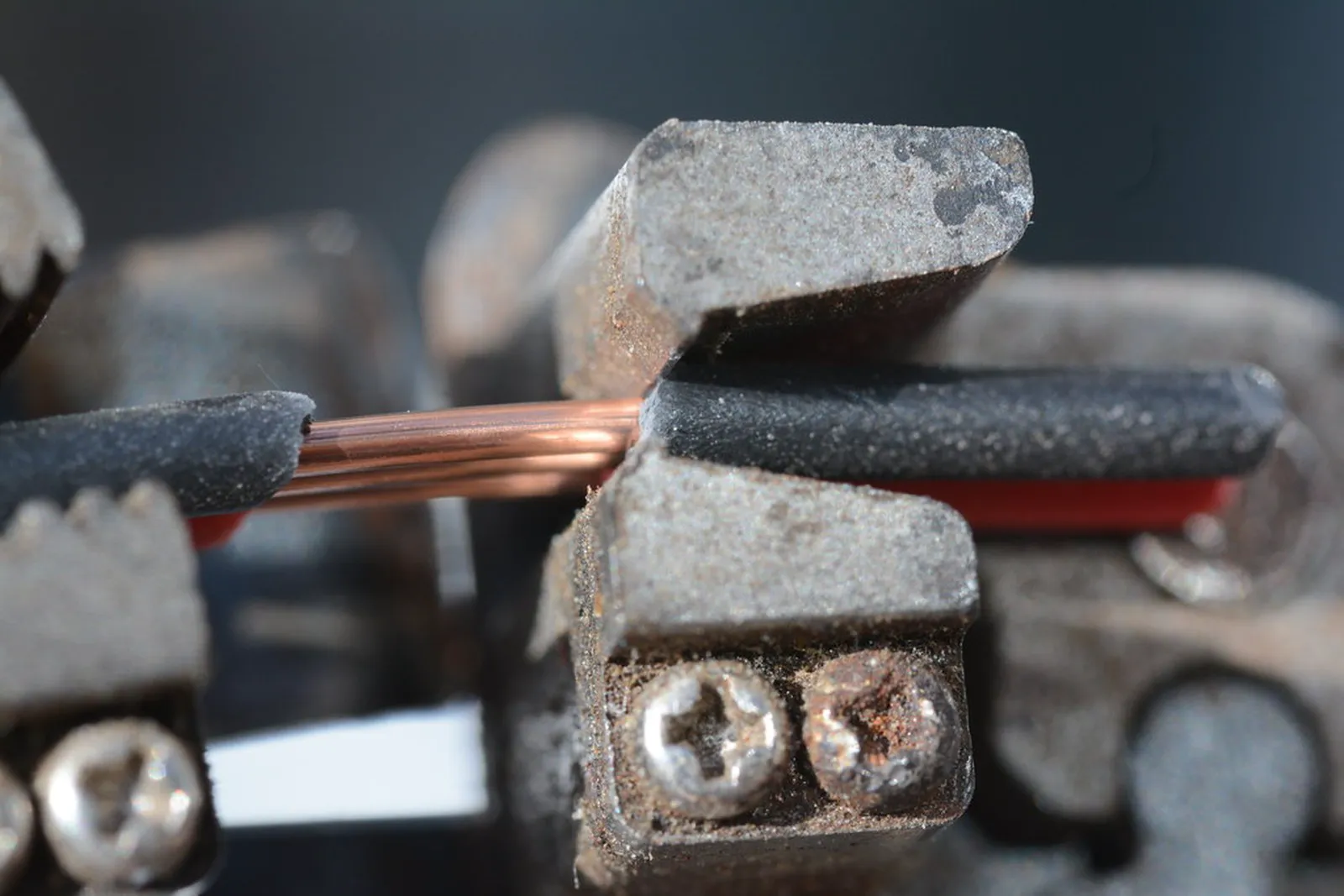
With CYKY's solid conductors, bare copper can be sold as Millberry if it is new, clean and shiny. For CYKY 5×2.5 it works out like this:
100 m insulated:   21.2 kg × €3.50             = €74.20
100 m stripped:    11.2 kg of copper × €10.00  = €112.00
Difference:                                      €37.80
For 100 m of five-core cable that is just under €38 extra for stripping 500 m of cores. For CYKY 3×1.5 the difference is even smaller. When stripping pays off and when it does not is discussed in the article Stripping cables: when it pays off and when it doesn't.
How to prepare CYKY offcuts for buyout
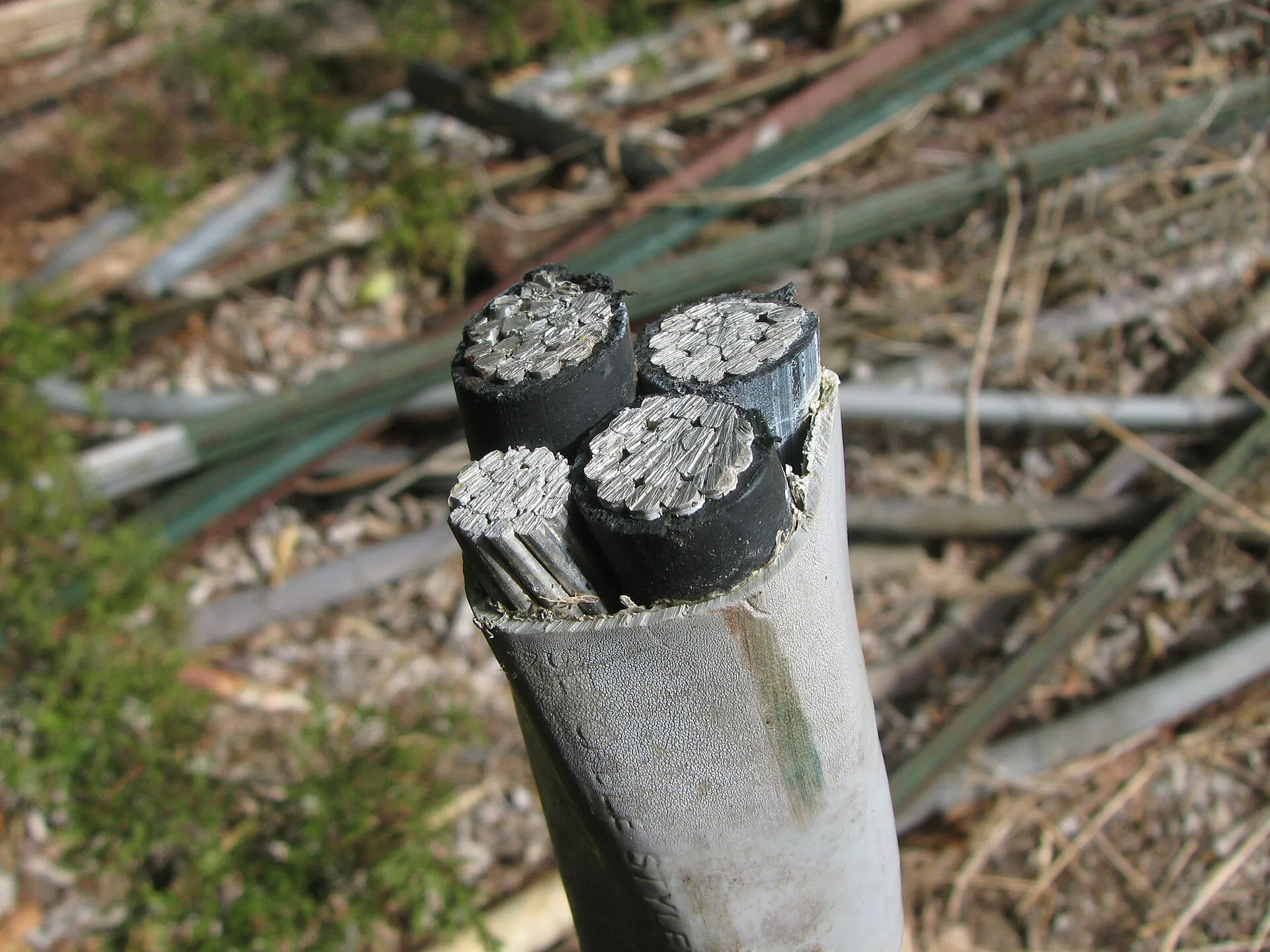
- Separate copper from aluminium. AYKY and old aluminium wiring belong to a completely different, cheaper group. One aluminium piece in a bag of copper worsens the classification of the whole batch.
- Keep thicker cross-sections separate. 5×2.5, 5×4 and thicker power cables have a higher copper share than 3×1.5.
- Do not mix thin communication and low-voltage cables with CYKY. They have a much lower metal content.
- Remove terminals, boxes and trunking pieces. Brass from terminals can be sold separately.
- Hand in drum remnants without the wooden or plastic drum, or expect the packaging to be weighed separately.
Do you have a larger amount of offcuts or dismantled wiring? For larger volumes a container or collection can be arranged.
Common mistakes
- Estimating the copper share from the outer diameter. What matters is the core cross-section and insulation thickness, not the thickness of the cable.
- Mixing CYKY with CYA or CY wires. Single-core wires have a different ratio of metal to insulation.
- Burning the insulation. It is prohibited, and burnt copper is bought for less than shiny copper.
- Calculating with the exchange price of copper. The scrap price of cable is based on metal content and processing costs, not directly on the exchange.
Frequently asked questions
How much copper is in 1 metre of CYKY 3×2.5 cable?
Approximately 67 g. Three cores with a cross-section of 2.5 mm² total 7.5 mm², which at a copper density of 8.96 g/cm³ gives 67.2 g per metre.
How much copper is in 100 metres of CYKY 3×1.5?
Approximately 4 kg. One metre contains about 40 g of copper; according to the manufacturer the whole cable weighs about 9.7 kg per 100 m.
How much do 100 m of CYKY 5×2.5 cable weigh?
According to NKT datasheets, approximately 21 to 22 kg. Of that, about 11.2 kg is copper.
How much will I get per metre of CYKY cable?
Approximately €0.29 per metre of CYKY 3×1.5, €0.43 per metre of CYKY 3×2.5 and €0.74 per metre of CYKY 5×2.5, according to the WIP price list as of 9 Nov 2026. However, the buyout pays per kilogram, not per metre.
Is there a difference in copper content between CYKY-J and CYKY-O?
No. The J or O designation indicates whether the cable has a green-yellow protective core. The number of cores and the cross-section are the same, so the copper content is the same too.
Conclusion
The copper content of CYKY cable can be calculated more precisely than for most other cables because it has solid copper conductors. CYKY 3×1.5 has about 41 % copper, 3×2.5 about 47 % and 5×2.5 about 52 %. At buyout it is accordingly classified in the Cu cables 40 % to 50 % groups. You get the most if you separate offcuts from aluminium and thin cables and keep thicker cross-sections apart. Whether it is worth collecting cables from jobs at all is covered in the article Is it worth collecting cables from jobs?
Have you collected CYKY offcuts and don't know which group they belong to? We determine the classification at inspection based on cable type and cross-section.
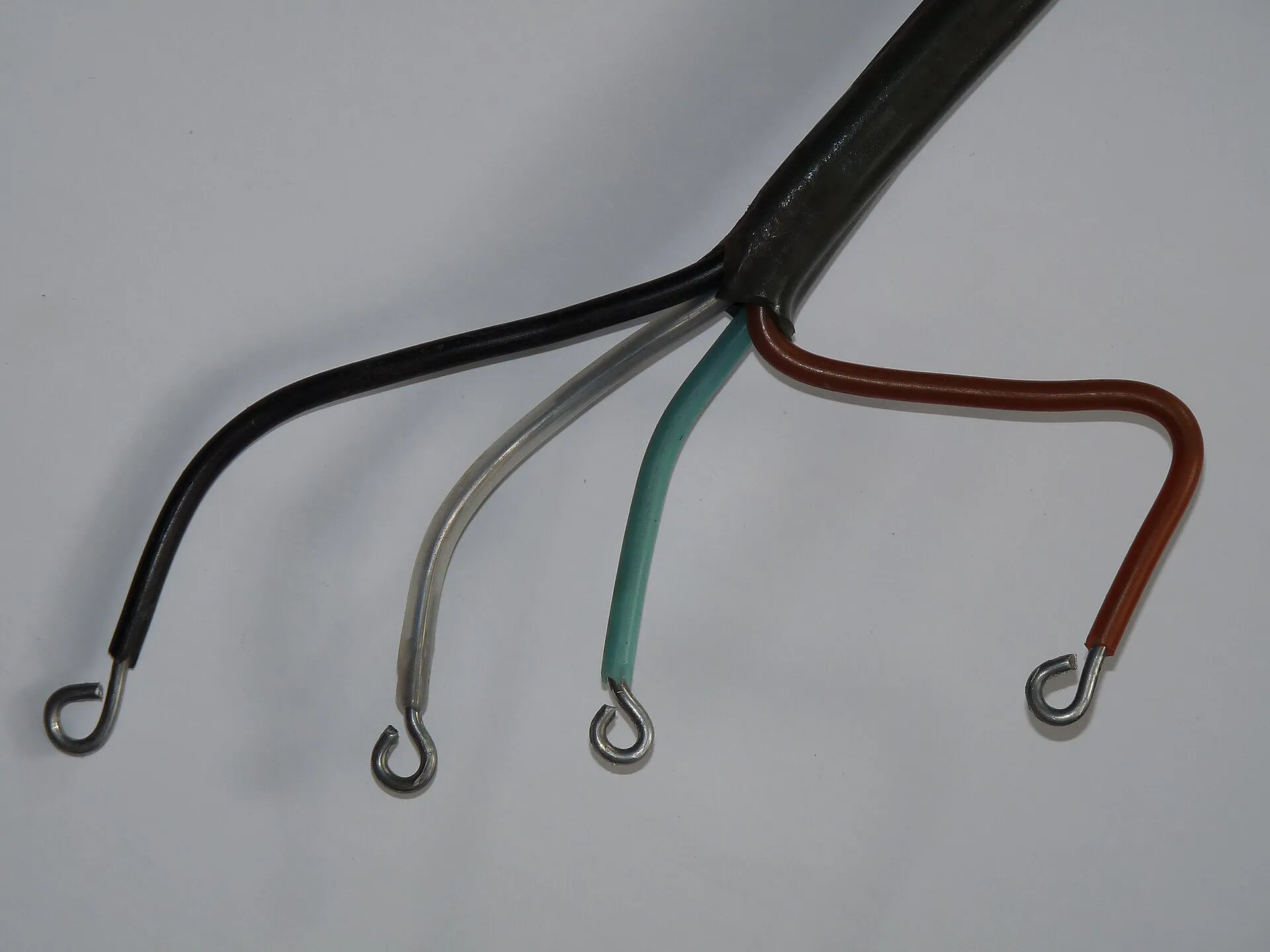
Cover photo: Petar Milošević, Wikimedia Commons, licence CC BY-SA 4.0.