LME copper price and scrap buying price: how are they related?
LME copper price and scrap buying price: how are they related?
The LME copper price is the price at which pure copper cathode is traded in large volumes on the London Metal Exchange, and it is the starting point for buying prices of copper scrap. The buying price moves in the same direction, but it is always lower, because copper scrap has to be collected, sorted, transported and remelted into copper of the quality traded on the exchange. According to our calculations as of 13 November 2026, you get roughly 81% of the exchange price converted into euros for bright copper wire, and roughly 40 to 60% for the copper contained in cables.
What is the LME copper price
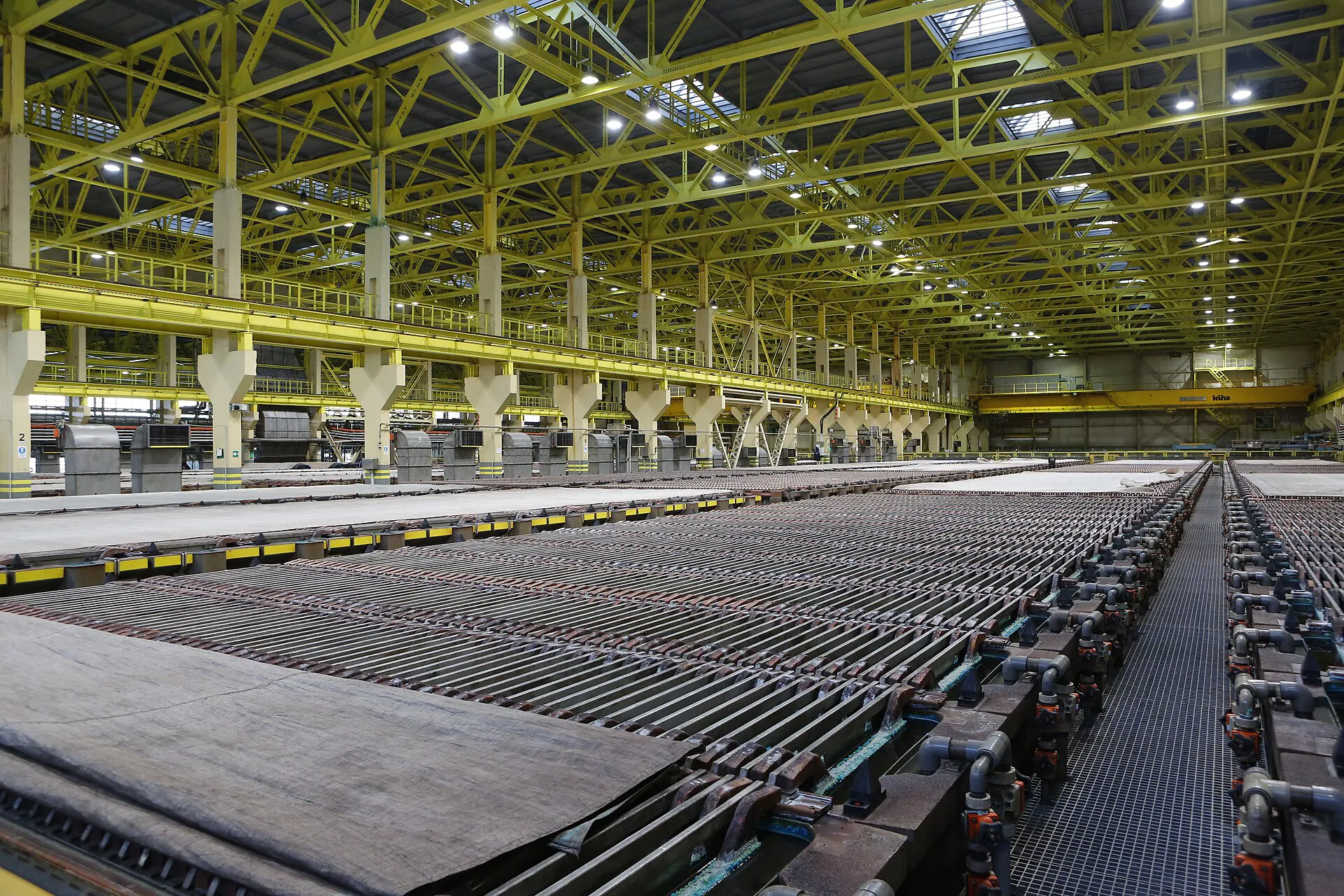
The London Metal Exchange (LME) is the world's largest exchange for non-ferrous metals. It trades Grade A copper in the form of cathodes, i.e. almost pure electrolytic copper that meets BS EN 1978:2022 Cu-CATH-1 or an equivalent standard. Copper is traded in lots of 25 tonnes and the price is quoted in US dollars per tonne.
When people talk about the "exchange price of copper", they usually mean the LME Official Price. The exchange sets it every business day around noon London time based on trading in the so-called Ring. Two values matter for copper:
| LME price | What it means |
|---|---|
| Cash (Cash-Settlement) | price for copper delivered in two business days, the most frequently quoted official price |
| 3-month | price for copper delivered in three months, the most actively traded contract |
Copper is also traded on the US COMEX exchange and on the Shanghai Futures Exchange (SHFE). For the European scrap market, however, the LME copper price is the reference.
LME copper price in November 2026
According to LME data published by Westmetall, the official cash price of copper on 13 November 2026 was USD 13,610 per tonne and the 3-month price USD 13,545 per tonne. A month earlier, on 14 October 2026, the cash price was USD 14,751 per tonne, about 7.7% higher. The exchange price changes every day, so treat these figures only as an example for the given date.
How to convert the exchange price into euros per kilogram
The exchange quotes prices in dollars per tonne, the buyer in euros per kilogram. The conversion is simple:
price in € per kg = LME price in USD per t ÷ EUR/USD rate ÷ 1,000

13 Nov 2026: 13,610 USD/t ÷ 1.1052 ÷ 1,000 = approx. €12.31 per kg of copper
The rate of 1.1052 is the ECB reference rate of 13 November 2026. It follows that the dollar exchange rate also affects the price of copper in euros. When the euro strengthens against the dollar, copper becomes cheaper in euros even if the LME price does not change.
LME copper price and the buying price in the WIP price list
We compared the LME copper price converted into euros with the WIP price list, which we loaded on 14 November 2026. For copper cables, we divided the price per kilogram of cable by the metal content given in the name of the price group, so the result is the price per kilogram of copper contained in the cable.
| Item in the WIP price list | Price per kg | Price per kg of copper | Share of the LME price (€12.31/kg) |
|---|---|---|---|
| Cu drôt nový – Millberry (new copper wire) | €10.00 | €10.00 | approx. 81% |
| Cu MIX (burnt and tinned copper) | €9.60 | €9.60 | approx. 78% |
| Cu káble 60% (copper cables) | €4.00 | approx. €6.67 | approx. 54% |
| Cu káble 50% | €3.50 | €7.00 | approx. 57% |
| Cu káble 40% | €3.00 | €7.50 | approx. 61% |
| Cu káble 30% | €2.00 | approx. €6.67 | approx. 54% |
| Cu káble 20% | €1.00 | €5.00 | approx. 41% |
| Cu káble 10% | €0.50 | €5.00 | approx. 41% |
price per kg of copper in cable = price per kg of cable ÷ metal content
share of LME price = price per kg of copper ÷ LME price in € per kg

Cu cables 40%: €3.00 ÷ 0.40 = €7.50 per kg of copper;  7.50 ÷ 12.31 = approx. 61%
The calculation is illustrative. The actual copper content of a cable varies within a group, and the buyer determines the final grading on inspection. Buying prices change; current prices are always in the WIP price list.
The table shows a rule that applies to any scrap buyer: the purer and easier to process the copper is, the closer its buying price is to the exchange price. Bare bright wire is closest to the LME price, thin cables with low metal content are furthest from it. The difference between Millberry and Cu MIX is discussed in the article Cu mix, tinned and burnt copper: differences when selling.
Want to compare your material with current prices? The price list contains all groups of copper, aluminium and brass.
Why a buyer never pays the exchange price
The exchange price applies to Grade A copper cathode delivered in 25-tonne lots to an exchange warehouse. Copper scrap from an electrician is a different product. Between a kilogram of offcuts and a tonne of cathodes there are several steps, and each of them costs something:
- Collection and transport. The material has to be received, hauled and finally delivered to a processing plant or smelter.
- Sorting and inspection. The buyer separates copper from brass, steel and aluminium and estimates the metal content.
- Cable processing. Cables are shredded and granulated, and the insulation is separated and disposed of. With thin cables, copper yield is lower and the work more expensive.
- Remelting and refining. A smelter pays less for scrap than for cathode, because it still has to make cathode out of it.
- Price risk. Days to weeks pass between buying and selling the processed copper. If the exchange price falls in the meantime, the buyer bears the loss.
- Operations and margin. Premises, scales, staff, waste-handling permits.
That is why even the purest scrap copper is worth less than the exchange price. With cables, there is also the insulation, which nobody pays for and whose disposal costs money.
How quickly an LME change shows up in buying prices
Buying prices move in the same direction as the LME copper price, but usually not from one day to the next. Buyers adjust their price lists to the longer-term trend on the exchange and usually do not copy short-term swings. They also sell the processed copper later, so they pass exchange movements into the price list with some delay.
For an electrician, this means two practical things:
- Don't speculate with small quantities. With 50 kg of cable in the 40% group, a 5% change on the exchange means a difference of a few euros, while storage can degrade the material (bright copper oxidises in damp conditions).
- With larger volumes, watch the exchange and ask. If you have hundreds of kilograms of copper, it makes sense to follow the LME copper price and check the current buying price before delivery.
An illustrative calculation of the effect of a fall on the exchange, assuming the buying price changes in the same proportion:
50 kg of cable, group Cu cables 40% at €3.00 per kg = €150.00
5% fall:                                 €150.00 × 0.95 = €142.50
difference:                                                €7.50

300 kg of bright Millberry wire at €10.00 per kg = €3,000.00
5% fall:                               €3,000.00 × 0.95 = €2,850.00
difference:                                              €150.00
In reality the buying price does not have to change exactly in proportion to the exchange; the calculation only shows the order of magnitude.
What you can and cannot influence
You cannot influence the LME copper price or the dollar exchange rate. You can, however, influence which price group your material falls into, and that has a bigger effect on what you get than normal exchange fluctuations. In the WIP price list, the difference between copper in cable and bare copper is more than double, while the exchange usually moves by a few percent in a month.
- Sort by cross-section. Thicker cores have a higher copper content. How much copper common cross-sections contain is calculated in the article How much copper is in CYKY cable.
- Keep bright wire separate and dry. Millberry is the item closest to the LME price. The conditions are described in the article Millberry copper wire: what it is and how to sell it.
- Copper without brass, steel and aluminium. Contaminants pull a batch into a lower group.
- Strip only where it pays. Yes for thick solid cores, usually not for thin stranded wires. Details in the article Cable stripping: when it pays and when it doesn't.
Do you have a larger amount of copper and want to know what you'll get for it? For larger volumes, a container or collection can be arranged.
Common mistakes
- Comparing with the exchange price per kilogram. The exchange price applies to copper cathode, not to scrap or cables.
- Forgetting the dollar rate. The LME price is in USD, the buying price in euros. When comparing, always convert using the rate from the same day.
- Converting the cable price to the full copper price. A kilogram of cable is not a kilogram of copper; you are also paying for insulation.
- Waiting for the exchange to rise with a small quantity. The difference is usually small and storage risks oxidation of bright copper.
- Relying on an old price. Check the current price list or call before delivery.
Frequently asked questions
What is the LME copper price today?
The official LME cash price of copper on 13 November 2026 was USD 13,610 per tonne, which at the ECB rate of 1.1052 corresponds to approximately €12.31 per kilogram. The current price is published every business day by the London Metal Exchange (lme.com) and taken over by market data sites such as Westmetall.
What percentage of the exchange price will I get when selling copper?
According to our calculation based on the WIP price list as of 14 November 2026 and the LME price of 13 November 2026, about 81% for bright Millberry wire, 78% for Cu MIX and roughly 40 to 60% when the price of copper cables is converted to the copper they contain. The ratio changes with both the exchange and the price list.
Why didn't the copper buying price fall immediately when the exchange fell?
Buyers usually do not copy daily exchange swings and adjust their price lists to the longer-term trend. The same applies when the LME copper price rises, so with a larger quantity, check the price before delivery.
What is the difference between the cash and 3-month price?
Cash is the price for copper delivered in two business days, 3-month for delivery in three months. The difference between them is usually tens to low hundreds of dollars per tonne. The cash price is normally used for comparison with buying prices.
Does the euro exchange rate also affect the copper price?
Yes. The LME price is in dollars, so with a stronger euro copper is cheaper in euros and with a weaker euro more expensive, even if the exchange price does not change.
Conclusion
The LME copper price is the price of pure copper cathode in large volumes, not the price of scrap. The buying price is derived from it and moves in the same direction, but it is lower by the costs of collection, sorting, processing, refining and price risk. As of 13 and 14 November 2026, this meant about 81% of the LME price for bright wire in the WIP price list and roughly 40 to 60% when copper cables are converted to the copper they contain. You cannot influence exchange fluctuations, but by sorting correctly you influence which group your material belongs to, and that has a bigger effect on what you get.
Want to know what you'll get for your copper? We grade the material on inspection at the WIP cable buying point (káblovňa) in Bratislava, phone +421 911 829 999.
Cover photo: Вадим Смальков, Wikimedia Commons, licence CC BY-SA 4.0.