Replacing aluminium wiring in a panel block flat: what to do with the old cables
Replacing aluminium wiring in a panel block flat: what to do with the old cables
Replacing aluminium wiring in a panel block flat is a job for a qualified electrician, not a DIY renovation task. Under the Waste Act, the old cables pulled out of the walls are generally the waste of the company doing the work, and it is that company that should hand them over for recycling. The simplest approach for you is to agree with the electrician in advance that they will take the old cables away, and not to throw them in a skip or burn them.
Why aluminium wiring in panel blocks is being replaced
Many panel blocks (paneláky) built between the 1960s and 1980s still have the original aluminium wiring in their flats. Aluminium was cheaper than copper at the time and was sufficient for the appliances of that era.
Today a flat has an oven, a dishwasher, a hob, air conditioning and chargers. Old aluminium wiring has three problems with this:
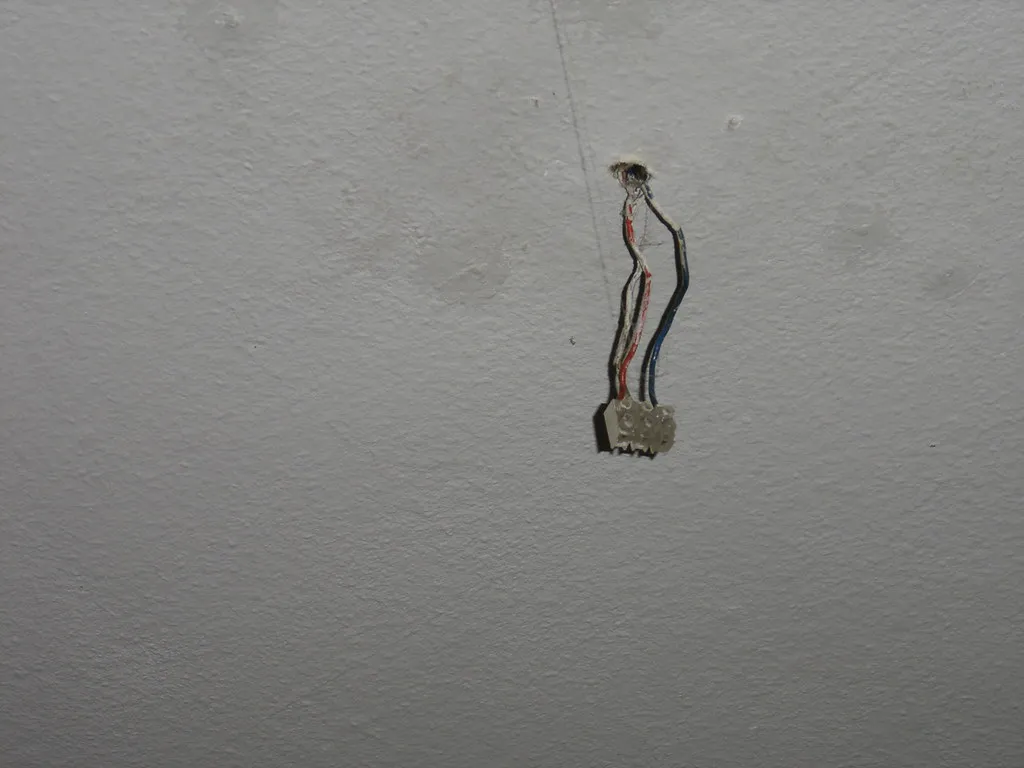
- Connections work loose. Aluminium expands and contracts as it heats and cools, and under a screw it slowly "creeps". A loose connection heats up.
- Aluminium is brittle. A conductor that is bent at every repair can break right inside a junction box or socket.
- Capacity and protection. The original wiring was not designed for today's loads, and a separate protective earth conductor is often missing.
If your lights flicker, sockets feel warm or circuit breakers trip, have an electrician assess the installation. In a full flat renovation it is recommended to replace the wiring together with the other work, while the walls are open.
Replacing aluminium wiring: who is allowed to do it
In Slovakia, work on electrical installations may only be carried out by a person with professional competence under Decree No. 508/2009 Coll. The decree distinguishes, for example, an electrical technician (elektrotechnik, § 21), an independent electrical technician (samostatný elektrotechnik, § 22) and an inspection technician (revízny technik, § 24). The inspection technician carries out the professional inspection and test, commonly called an inspection (revízia).
For you, this means two practical things:
- Do not replace the wiring yourself, not even "just the cables in one room". A fault in the electrical installation puts you and your neighbours at risk.
- When the work is finished, ask the electrician for the report on the professional inspection and test (inspection report, revízna správa). It is proof that the new installation is safe and can be useful when selling the flat, for an insurance claim or for further alterations.
This is not a guide to replacing wiring. The article covers what to agree on and what to do with the old cables once the electrician has pulled them out.
Your flat or the whole building?
In a panel block, wiring falls into two parts:
- wiring in the flat from the flat's distribution board to the sockets and lights, which you decide on as the flat owner,
- shared wiring (risers, distribution boards in the corridors, lighting of common areas), which belongs to all owners in the building and whose replacement is decided by the owners' association or the building manager.
If you are only replacing the wiring in your own flat, ask the building manager whether the risers are also due to be replaced. The electrician can then prepare the supply to your flat for the new parameters straight away.
Who owns the old cables after the wiring is replaced
Many people only ask this when they see bags of cables in the corridor.
Act No. 79/2015 Coll. on Waste states in § 77 (2) that for construction work carried out for natural persons, the producer of the waste is whoever carries out the work. When an electrician or a company replaces the wiring in your flat, the old cables are generally their waste. They are responsible for where the cables end up.
A second rule applies to scrap buyers. Under § 16 (6) (e) of the same act, a buyer may only buy metal waste originating from electrical wiring from entities authorised to work with it, or from companies working with it under a contract. Old wiring therefore naturally belongs in the hands of the electrician or their company, not in the boot of a private car.
In practice this means:
- Agree in advance. Have the quote state that the company will take away the old cables and other waste from the electrical work.
- You can take the value of the cables into account in the price. For a small flat it is a few euros to a few dozen euros, but for a house with more cable it is worth discussing.
- You do not need to collect or transport anything. The electrician hands the cables in to a buying point together with cables from other jobs.
Are you an electrician with bags of aluminium cable left over from rewiring jobs? Hand in aluminium and copper separately: each has its own group in the price list.
How much old aluminium cable from a flat is actually worth
Less than people usually think. The buyer pays for the metal in the cable, not for the insulation, and aluminium is much cheaper than copper.
In the WIP price list we checked on 17 November 2026, the aluminium and related groups are as follows:
| What is left after rewiring | Price list group | Price per kg |
|---|---|---|
| old insulated aluminium cables | Al cables with metal content up to 40 % | €0.50 |
| thicker aluminium cables (e.g. supply cable) | Al cables 60 % | €0.80 |
| stripped clean aluminium | Al conductor clean, bright | €2.00 |
| offcuts of new copper cables (e.g. CYKY) | Cu cables by metal content | €0.50 to €4.00 |
The buyer decides which group particular cables belong to. Prices change with metal prices; you will find current figures in the price list.
Worked example (illustrative)
In a three-room panel block flat, the electrician pulls out about 200 m of old three-core aluminium cable with a cross-section of 2.5 mm².
Aluminium in 1 m:    3 × 2.5 mm² × 2.70 g/cm³ ≈ 20 g
Aluminium in 200 m:  200 × 20 g               ≈ 4 kg
Cable weight:        200 m × approx. 0.10 kg/m ≈ 20 kg  (aluminium share approx. 20 %)
Buy-back value:      20 kg × €0.50            ≈ €10
The figures are illustrative. The length of cable in a flat, the type of conductors and the weight of the insulation vary. But the calculation shows the key point: for a single flat this is not about earning money, but about making sure the cables end up legally in recycling. How the aluminium content of thicker cables is calculated is shown in the article Aluminium cable AYKY: buy-back price.
What not to do with old cables
- Do not burn them. Burning insulation produces toxic fumes. The Waste Act in § 13 (h) prohibits burning municipal waste in the open air and in household heating appliances.
- Do not throw them in a rubble skip or in mixed waste. The metal is lost for good, and with a hired skip you pay for every kilogram.
- Do not leave them in the cellar "for later". Their value is small and in a few years you will be dealing with the same problem.
- Do not mix them with new copper offcuts. If the electrician also hands in offcuts of new cables, copper and aluminium have completely different prices in the price list.
Step by step
- Have an electrician assess the installation. They will tell you whether a partial repair is enough or a full replacement makes sense.
- Check what is yours and what belongs to the building. You deal with the wiring in your flat; risers and corridor distribution boards are handled by the owners' association or building manager.
- Choose a company with professional competence. Ask who will carry out the inspection and when you will receive the inspection report.
- Have waste removal written into the quote. Including old cables, boxes and debris from cutting the chases.
- Ask for the inspection report when you accept the work. Without it you have no proof that the new installation is safe.
- Check that no bags of cables are left in the corridor. If there are, remind the company of the agreement.
If you have small leftovers after the renovation that the company did not take, ask at your municipality's collection yard (zberný dvor). The Waste Act allows natural persons to hand in small construction waste there; the exact conditions are set by each municipality in its generally binding regulation.
Are you rewiring several flats or a whole building? For larger volumes of old cable, a container or collection can be arranged. Call the WIP cable buying point (káblovňa) in Bratislava on +421 911 829 999.
Common mistakes
- DIY rewiring. It is dangerous, and without an inspection you have no proof the installation is safe.
- Replacing only part of the wiring without a plan. The electrician joins aluminium to copper using terminals designed for that purpose. Combining old and new without professional assessment is a source of faults.
- No agreement about the waste. Cables and rubble are then left to you or in the corridor.
- Burning the insulation to get at the metal. It is prohibited, and with such a small amount of aluminium it makes no economic sense either.
Frequently asked questions
Can I replace the aluminium wiring in my flat myself?
No. Work on electrical installations may only be carried out by a person with professional competence under Decree No. 508/2009 Coll., and after replacement a professional inspection and test (revízia) is carried out.
Who owns the old cables when a company replaces my wiring?
For work carried out for a natural person, the producer of the waste under § 77 (2) of the Waste Act is whoever carries out the work. The old cables are therefore generally the company's waste, and it should hand them over for recycling.
Can I sell old aluminium cables from my flat to a buying point myself?
Under § 16 (6) (e) of the Waste Act, buyers may only buy metal waste from electrical wiring from entities authorised to work with it, or from companies working with it under a contract. The simplest option is therefore to leave the hand-over to the electrician. If you are unsure, ask the buying point directly.
How much will I get for old aluminium cables from a flat?
For a single flat, usually a few euros to a few dozen euros. In the WIP price list as of 17 November 2026, Al cables with metal content up to 40 % are €0.50 per kg.
Do I have to inform the building manager when replacing wiring in a panel block?
If the work only affects the wiring in your flat, the decision is yours. Work on common parts, such as risers or the corridor distribution board, requires the consent of the building's owners, which is arranged by the building manager or owners' association. Informing the manager in advance is always sensible, as the work may require switching off the supply to the flat.
How can I tell if my flat has aluminium wiring?
An electrician can assess this reliably during an inspection. Panel blocks built up to the 1980s often, but not always, have aluminium wiring.
Conclusion
Replacing aluminium wiring in a panel block flat is a job for a qualified electrician and ends with an inspection. For work done for a private person, the old cables are generally the waste of the company that removed them, and a buyer may accept them from an entity authorised to work with wiring. For you, this means a simple procedure: agree on removal of the old cables in the quote, ask for the inspection report, and do not burn anything or throw it in with the rubble. What to do with other cable leftovers after a renovation is covered in the article Leftover cables after a renovation: what to do with them.
Have a question about handing in old cables from wiring? Ask the WIP cable buying point (káblovňa) in Bratislava how to proceed in your case.
Contact the cable buying point →
Sources
- Act No. 79/2015 Coll. on Waste, wording in force from 1 January 2026 (§ 13, § 16, § 77, § 80), Slov-Lex.
- Decree of the Ministry of Labour, Social Affairs and Family of the Slovak Republic No. 508/2009 Coll. (§ 13, § 19 to § 24), Slov-Lex.
- WIP Autovrakovisko price list, checked on 17 November 2026.